
Below-the-hook lifting devices are specialized attachments that enable you to move loads securely from one location to another with cranes, hoists, and other lifting equipment.

Below-the-Hook Devices We Supply and Engineer
Simmers offers below-the-hook devices designed and manufactured for a wide range of applications. No matter how large or challenging your lift configuration and load handling requirements, we can provide the right solution.
Spreader Beams
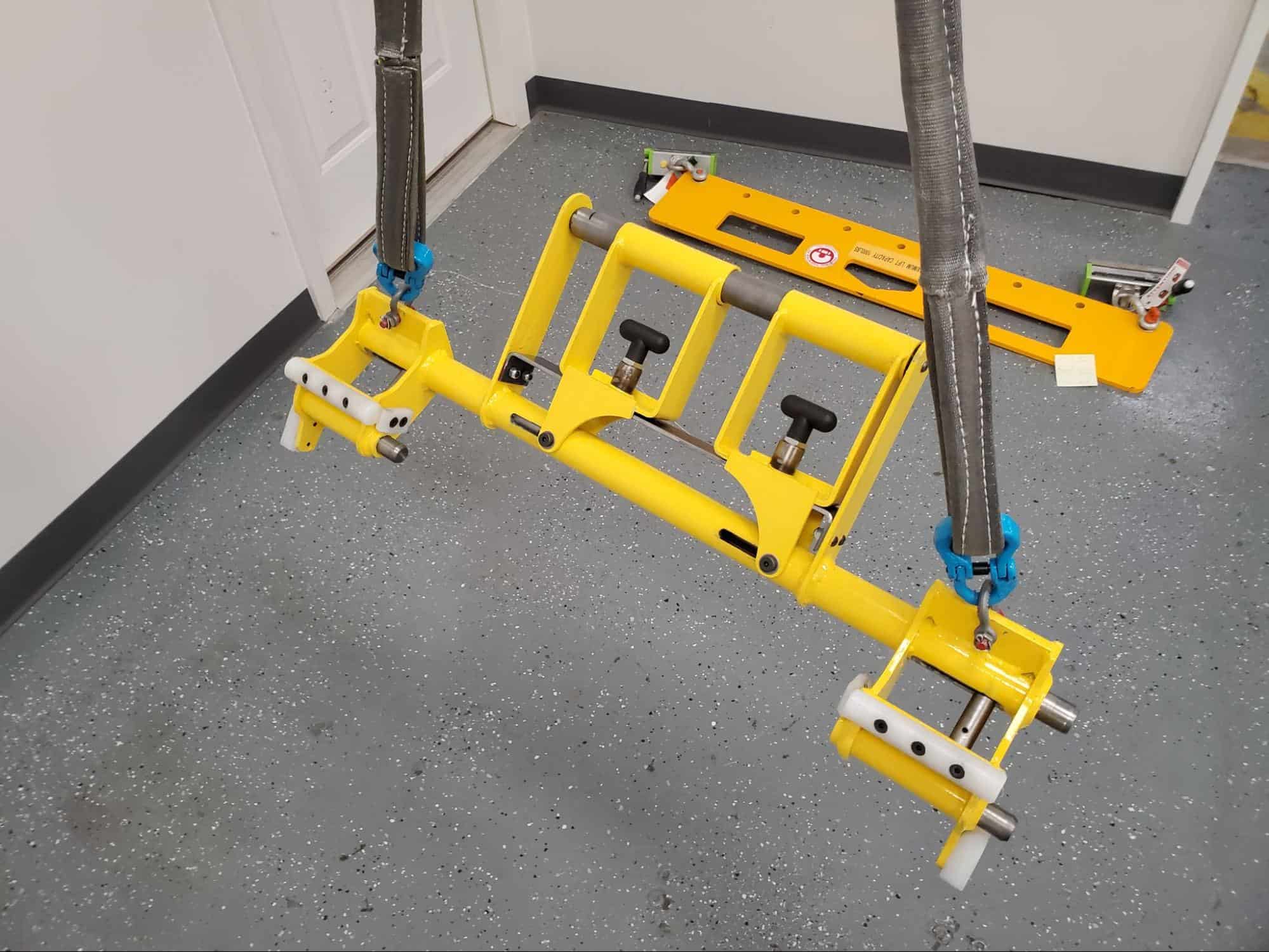
Spreader beams are long, sturdy bars that support two or more slings underneath. By distributing weight across multiple lifting points, the beams reduce the compressive force on heavy, oversized loads ‒ ensuring they remain safe and secure while they’re being transferred.
Coil Hooks
Coil hooks have a distinctive, C-shape hook that slides into the center of coiled loads. Their unique design allows them to lift coiled materials without gripping their edge, ensuring they remain stable while minimizing the risk of warping or deformation.
Coil Lifters
Coil lifters grab coiled materials with a set of mechanical arms or tongs that either hook into the material’s inner diameter or cradle it from the outside. Designed for both horizontal and vertical lifting, these devices distribute weight and grip evenly to ensure the load’s integrity.
Pallet Lifters
Pallet lifters consist of two heavy duty forks connected to a lifting bail. This simple design allows them to slide underneath skids, crates, and pallets to ensure loads stay balanced while they’re moved between workstations or drop-off sites within your facility.
Tongs
Lifting tongs use clamps to pick up materials without designated attachment points. Rubber pads may be installed to improve grip and prevent scratching, allowing you to move round, cylindrical, and oddly shaped loads without risk of dropping or damage.
Magnet Lifters
Magnet lifters use powerful electromagnets to lift and move ferrous metal objects such as iron and steel. The lack of hooks, chains, and rigging equipment reduces cycle times, increases throughput, and minimizes the risk of damage in industrial material handling operations.
Vacuum Lifters
Vacuum lifters use powerful suction to lift and hold flat, smooth, non-porous materials without hooks, clamps, or slings. Because they rely on air pressure to secure loads, they allow operators to move, rotate, and position objects without scratching, denting, or damaging them.
Gripper Manipulators
Gripper manipulators grab and maneuver objects with a set of mechanical, pneumatic, or hydraulic arms. Thanks to their articulated design, gripper manipulators can safely lift, move, and rotate a wide range of heavy and irregular objects without risk of shifting or dropping.
Ready-made solutions are predictable and reliable but cannot always meet the needs of operations with unique, demanding, or complex lifting requirements. In these situations, custom devices deliver strength, efficiency, and safety that standard equipment can’t match.
For businesses seeking to optimize workflow and material handling, Simmers designs and engineers below-the-hook devices built around your layout, environment, load characteristics, and production process. Our customized solutions not only improve performance, reduce downtime, and enhance safety, they also integrate seamlessly with your existing systems ‒ leading to greater output and long-term savings.
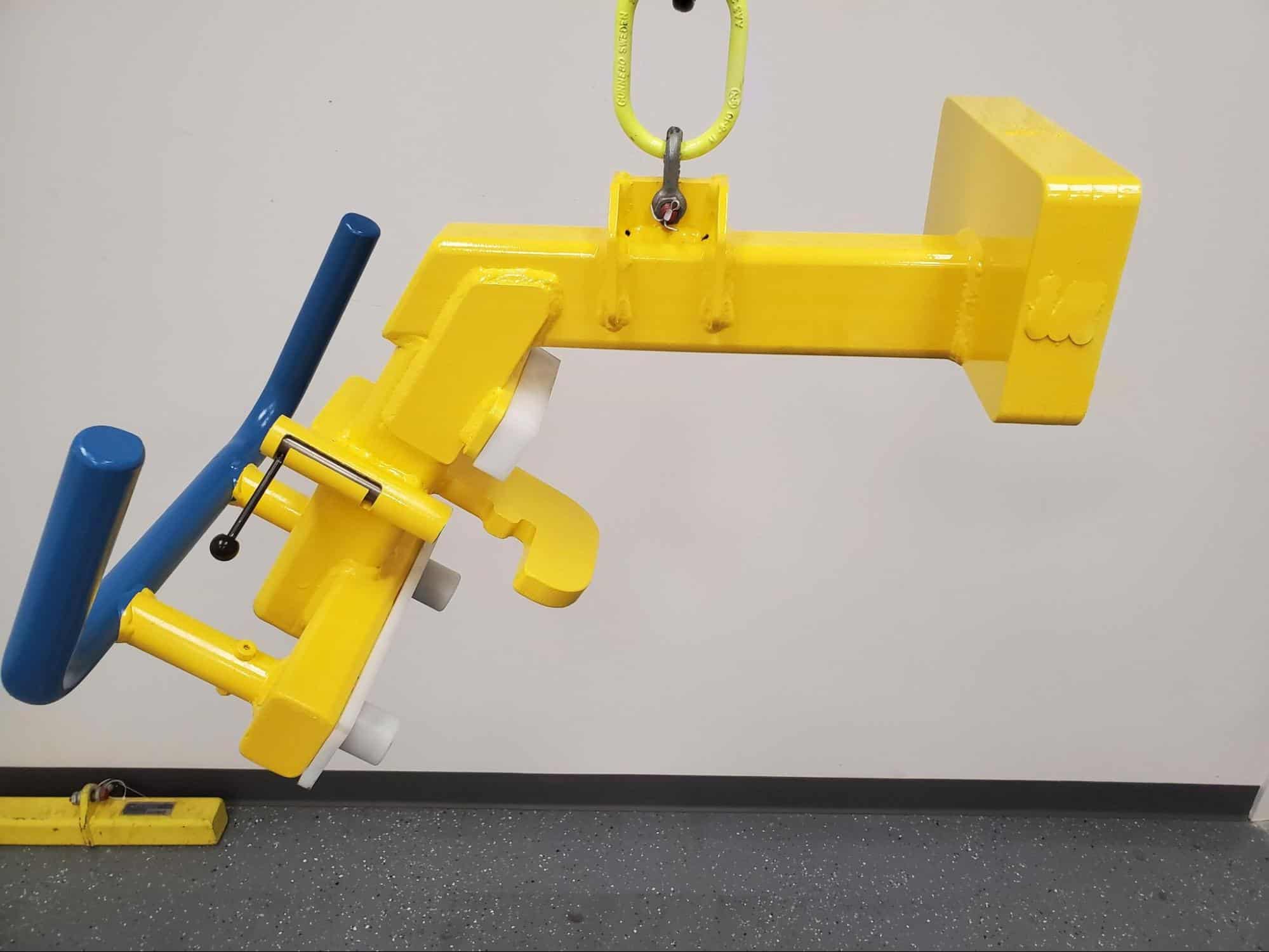
Every below-the-hook device we supply and manufacture is rigorously tested to ensure full compliance with OSHA safety and performance standards. Full inspections reduce the risk of stoppages and liability while helping ensure your workers, loads, and operation are protected from unexpected failures or downtime.
Below-the-Hook Repair and Recertification
Repetitive lifting tasks can wear down below-the-hook devices, reducing their reliability and longevity especially in locations that handle heavy materials on a regular basis. Most companies replace equipment once its performance starts to decline, but restoration is often more cost-effective.
After conducting a structural evaluation, Simmers engineers identify and repair cracked, deformed, and worn-out components. Refurbished devices are then tested to ensure they meet their original performance specifications, as well as safety and design standards set by the American Society of Mechanical Engineers (ASME). Once these checks are complete, the device is recertified and ready to meet your operational demands out in the field.
Why Choose Simmers Crane Design and Services?
Simmers offers a wide range of material handling equipment, including below-the-hook lifting devices built to fit site-specific applications. Our engineers use Creo 3D modeling to create precision designs, allowing us to analyze and refine their structural and mechanical components before fabrication begins.
Backed by decades of experience and expertise, we work with customers to ensure their devices are properly calibrated and comply with ASME BTH-1 requirements ‒ so you can be confident your below-the-hook devices are strong enough to lift and move any load, regardless of its shape, size, or weight.
FAQs
-
Do you design and manufacture custom below-the-hook devices?
Besides supplying standard below-the-hook devices, Simmers can also design and manufacture devices tailored to your exact lifting requirements.
-
Do you have engineers on staff, or do you outsource design work?
All design and manufacturing is performed in-house by Simmers engineers and technicians.
-
Do you provide on-site inspections and repairs for existing below-the-hook equipment?
Yes, our service teams regularly inspect existing below-the-hook equipment, even if we did not manufacture it.
-
Can you integrate a custom below-the-hook device with our existing crane or hoist?
Our design and engineering teams can integrate custom below-the-hook devices with systems built by all major manufacturers currently operating in the market.
-
Do you offer emergency service for below-the-hook equipment failures?
Simmers emergency service teams are available 24 hours a day, seven days a week, to repair and restore your lifting equipment.
-
What information do I need to request a quote?
To request a quote, please submit the following information to our engineering team.
- Target Completion Date
- Name of Project Lead
- Contact Phone and Email
- Tool Description
- Number of Tools Needed
- Description of the Crane’s Functionality
- Lift Operation (Manual, Electric, Pneumatic, Hydraulic)
- Number of Annual Cycles the Crane Will Perform
- System’s Desired Service Life
- Maximum Head Height in Your Facility
- Maximum Clearance Height in Your Facility
- Height of Destination
- Height of Origin
If there are any special considerations that need to be taken into account, please include them as well. We would also request any 3D models of the objects our cranes will be handling, if they’re available.
